When you are moving assets, legal documents, or corporate operations into Mexico, you will quickly find that translation is not a one-size-fits-all term. You will hit a wall of terminology where “certified” and “sworn” start appearing in emails and requirements. At first glance, they seem like synonyms (after all, both imply a level of official backing), but choosing the wrong one is a fast track to having your paperwork rejected by a Mexican notary or government office.
The stakes are high because the Mexican legal system is quite rigid about how it consumes information from abroad. For a director of operations or a legal lead, knowing the difference is not only about linguistics, but it is also about preventing a three-week delay in a contract signing because a stamp was missing. In Mexico, the law asks for accuracy, and also asks for a specific type of legal authority that only certain professionals hold, which, at Bilingual, we will explain below.
Understanding the hierarchy: Certified or sworn?
A certified translation is essentially a professional promise. It comes with a letter (a Certificate of Accuracy) where the translator or the agency says that it has been made by professionals and the translation is a faithful mirror of the original. It is perfect for internal business use, some HR processes, or when you are dealing with private entities that need to know what the document says.
A sworn translation, however, is a different beast. This is a document that has been “legalized” by its very creation. In Mexico, this is not just a professional service, but a legal act. A sworn translation is required when the document needs to be valid before a judge, a government secretary, or a public notary. It is the difference between a high-quality photocopy of an ID and the ID itself; one informs, while the other proves.
The “perito traductor”

If you are doing business in Mexico, the most important term you need to know is Perito Traductor. This is an authorized sworn translator who has been vetted, tested, and listed by the Superior Court of Justice or other federal authorities. Think of them as a hybrid between a linguist and a legal official. Mexican law is very clear: for any foreign document to be legally valid in a local proceeding, it must be handled by a Perito.
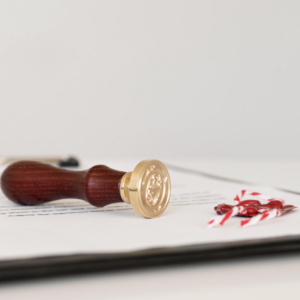
In the eyes of a Mexican official, a sworn translation document is a physical bundle. It includes a copy of the original document, the Spanish translation, and a closing statement where the Perito puts their license number, their jurisdiction, their signature, and, most importantly, their official seal. This seal is what gives the document “public faith” (fe pública). Without it, the most accurate translation in the world is just a piece of paper as far as the Mexican government is concerned.
When you cannot afford to skip the “sworn” part
The decision between a sworn translation and a certified translation usually depends on who is going to read it. If you are submitting articles of incorporation to set up a Mexican subsidiary, or if you are involved in a litigation process, you need a sworn one. Mexican notaries, who are the backbone of the country’s legal and business transactions, will strictly demand a Perito’s stamp on anything from a power of attorney to a birth certificate.
This requirement also extends to financial sectors. If you are a banking executive handling international credit lines or a health tech firm registering patents with COFEPRIS (Mexico’s health authority), the “sworn” route is the only path. It is a matter of institutional trust. The Mexican state relies on the Perito’s liability; if the translation is wrong, the Perito is legally responsible. That is a level of accountability that a simple certificate of accuracy does not provide.
Global quality standards still matter locally
Even though the Perito Traductor is a local legal requirement, the process behind the scenes should meet international benchmarks. A translation is not good just because it has a seal; it is good because it was handled by experts who understand the industry. Following ISO standards like ISO 17100 ensures that the translation undergoes a rigorous review process before it even reaches Perito’s desk for the final stamp.
In sectors like telecom or retail, where technical terminology is dense, you need a partner who understands the nuance of the language solutions industry. It is about ensuring that a “liability” in an English contract does not turn into something completely different in Mexican Spanish. Accuracy is about legal equivalence. High-level precision, backed by robust technology and human expertise, is what keeps global operations running without a hitch.
The logistics: Choosing a strategic language partner
Managing these documents involves a bit of strategy. For instance, before a Perito can even start, many foreign documents need an Apostille. This is an international certification that verifies the document’s origin. In Mexico, it is common practice to have the Perito translate the document and the Apostille together. This creates a complete, “plug-and-play” legal package for the Mexican authorities.
There is also the matter of data security. When you are handing over sensitive bylaws or financial audits, you need to know the information is safe. Using providers that comply with global security standards like HIPAA or PCI DSS is essential.
The goal is to find a partner that feels like an extension of your own team. You need a provider that combines the legal authority of local Peritos with the scale and efficiency of a global firm.
The right partner will tell you when you can save money with a certified translation and when you absolutely must go with a sworn one. They should offer flexibility and transparency, especially when managing high-volume projects across different time zones. At Bilingual, we can help you with that, so you can achieve a clear, authoritative, and legally sound communication.